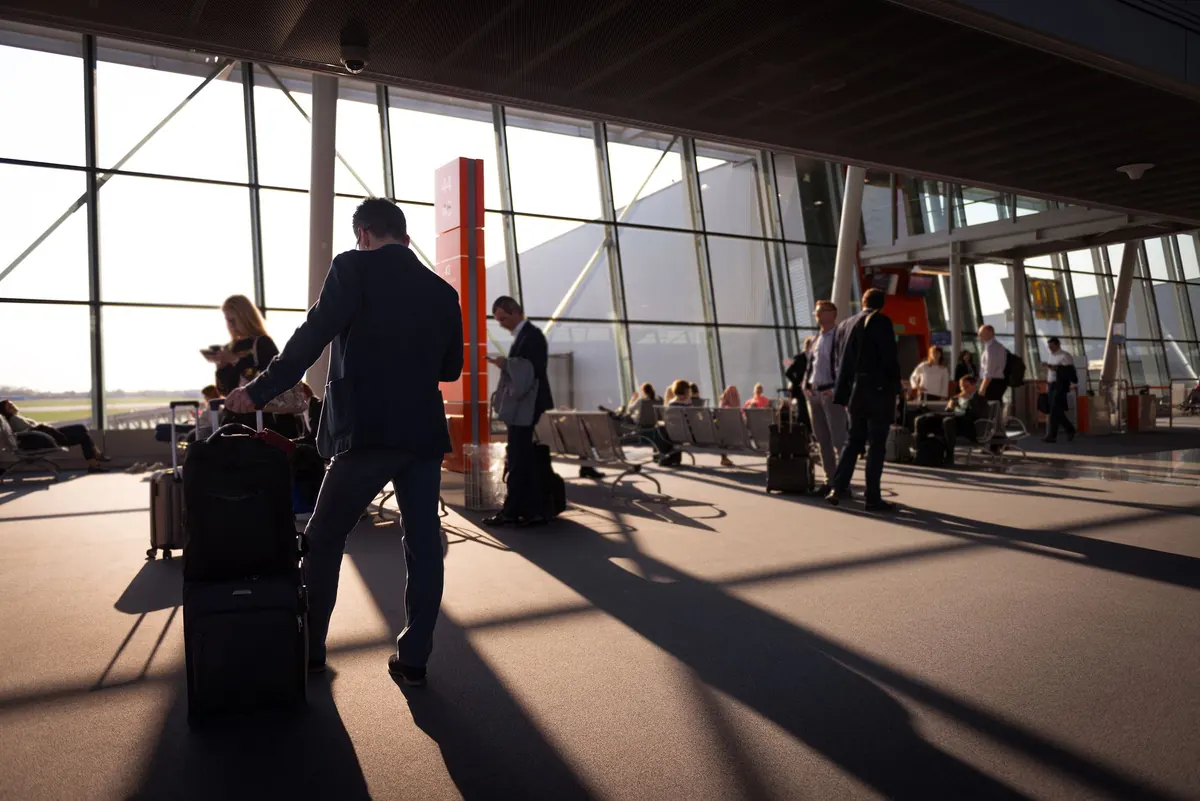
Carry-On vs Checked Bag: Which Actually Costs Less in 2025?
A checked bag fee feels like an easy yes or no at the booking screen. Thirty dollars, one click, done. Then you're standing at a carousel in Lisbon at midnight waiting for a bag that didn't make the connection, or at a gate in Denver watching an agent slide your roller into the sizing frame. Neither option is automatically cheaper. What tips the math is the trip itself: how long it is, how many connections it has, the fare you booked, and how much a lost afternoon is actually worth to you.
Run the numbers before you book, not at the airport counter, where everything costs more.
Start with the fare, not the bag
Baggage rules now live inside the fare rather than the airline. The same carrier that includes a carry-on with a standard economy ticket may sell a stripped "basic" or "light" fare that allows only a personal item — a purse or small backpack that fits under the seat in front of you. Book that fare with a roller bag and you'll pay a carry-on fee at the gate, usually more than you would have paid online during booking.
Before comparing anything else, open the fare rules and answer three questions:
- Does this fare include a full-size carry-on, or only a personal item?
- What does the first checked bag cost, each way, on this specific route?
- Is that price lower if I add the bag now rather than at the airport?
Two people on the same flight can be on completely different baggage deals. One booked a main-cabin fare with a carry-on included. The other saved a little on a stripped fare and will hand back more than that at the gate. That's the first place the "carry-on is free" assumption falls apart.
What a carry-on quietly costs
The airline fee is the visible cost. The hidden ones are time, comfort, and flexibility.
A carry-on keeps you out of the baggage hall, which is worth real money on a tight connection or a late arrival. It keeps your things with you, which matters if you're carrying medication, camera gear, or the one outfit that fits a wedding.
The costs show up elsewhere. You'll queue in the liquids line with a single clear bag of containers no larger than 100 ml or 3.4 oz, which means buying sunscreen, shampoo, and contact solution at your destination — often at resort-town prices. You'll board early to claim overhead space, and spend the flight half-watching a stranger eye your bag. On a long trip you'll either do laundry or pack less than you'd like.
There's also the gate-check shuffle. On full flights, especially on regional jets and smaller aircraft, rollers get taken at the door and returned on the jet bridge. You keep the bag, but you lose the speed advantage that made you carry it in the first place.
What a checked bag actually costs
Checked bag fees are at least predictable: usually charged per bag, per direction, so a round trip with one bag doubles the number you saw at checkout. A second bag costs more. Bags over the airline's weight limit — commonly 50 lb or 23 kg in economy, though it varies by carrier and route — cost more again, and overweight fees assessed at the counter can be steep. A cheap luggage scale at home is the best twenty dollars you'll spend on this problem.
Then there's the cost of not having your things: no changes of clothes, no chargers, no toothbrush until a bag shows up. That's an inconvenience on a beach trip and a genuine problem on a work trip.
The risk nobody prices properly
Most checked bags arrive on time. The ones that don't tend to fail at exactly the wrong moment: tight connections, multi-airline itineraries where two carriers never had a reason to cooperate, short layovers in a sprawling hub.
If your bag is delayed, most airlines will reimburse reasonable essentials, but you'll need receipts and the definition of "reasonable" is theirs to argue. If it's declared lost, compensation is capped. In the United States, the Department of Transportation sets a per-passenger liability limit for domestic flights; international itineraries fall under the Montreal Convention, with its own cap. Both sit in the low thousands of dollars — which may not replace a laptop, a suit, or a bag of camera gear. Never check valuables, medication, or documents you can't replace.
Credit cards and travel insurance can close the gap, but read the policy before you fly, not after. Delayed-baggage cover often starts after a set number of hours and pays a modest daily amount up to a cap. If you regularly fly with expensive equipment, that's worth a conversation with a professional insurance advisor rather than guesswork.
The time equation
Compare the two on time and the picture depends entirely on the itinerary.
Checking a bag means arriving earlier to clear the check-in cutoff, which is often 45 to 60 minutes before departure, then waiting 20 to 40 minutes at the carousel after landing. Carrying on skips the carousel entirely, but costs you boarding-group anxiety and, on some airlines, an earlier arrival at the gate to secure bin space.
On a direct, three-day trip, the carry-on wins on both cost and time — decisively. On a two-week trip with two connections and a checked bag fee that's lower than a week of laundry and toiletries, the checked bag usually wins, even accounting for a slow carousel.
When each one wins
- Carry-on: short trips, direct flights, tight connections, budget fares where a checked bag costs more than the fare difference, and any trip where your essentials are hard to replace.
- Checked bag: long trips, itineraries with generous layovers, travelling with children, bulky gear, and any case where walking straight out of the terminal is worth a fee.
- Both: one checked bag plus a carry-on holding everything you'd need for 48 hours. It's the strategy that survives almost any disruption.
How to decide in five minutes
Check the fare rules first and write down the real cost of each option, both directions, including any second-bag or overweight charges. Then ask a simpler question: if that bag goes missing for two days, what does the trip look like? If the answer is "ruined," carry it on or pack a survival kit in the cabin bag. If the answer is "annoying," check it and enjoy the walk out of arrivals.
And keep a photo of your packed bag and your bag tag on your phone. It's the one piece of preparation that helps whether you're claiming a delay, filing a claim, or just proving to yourself that yes, you did pack the charger.
Photo: Magic K / Pexels